Student voices

Testimonials

First-hand experiences help future learners see how orbital mechanics connects theory to practice.

2024 Advanced Maui Optical and Space Surveillance Technologies (AMOS) Conference

Extremely informative with great reference material and real-world coding applications. Best short course I've taken by far!
Course participant
It was a very good course that helped me to reaffirm the essence of orbital mechanics.
Course participant
As someone who needed an overview of orbital dynamics, I found the course very helpful. I found the inertial reference frame alongside the frame rotating with the Earth gave me an 'AHA!' moment.
D.H.
Overall short-course experienceAverage score: 6.0/6 · 1 = very poor; 6 = excellent
Average rating: 6.0 out of 6 for the overall short-course experience.

PHY-2021: Space Sciences, Winter 2026 : Course feedbacks

The professor’s experience in his field is one of the strengths of this course.
Étudiant·e
The lecture notes are well-organized. The material is presented clearly. I also appreciate that the material is relevant to current topics. There are plenty of resources for programming in MATLAB
J.-F. S.
The hands-on programming exercises let you experiment with different values to gain a better understanding, and the visualization tool developed by the instructor (Orbits101) is excellent
Étudiant·e
A very interactive course. The assignments and even the exams highlight real-world applications in the space sector—particularly those related to launches and satellites—which really helps you understand the material. It’s also a fascinating field, and for me, this course was a great introduction that solidified my interest in the subject.
M.D.
This course is super engaging! You can really feel the instructor’s passion when he teaches. The course provides a solid understanding of current events (e.g. the Artemis II launch), both space- and Earth-based phenomena, and a relevant introduction to astrodynamics. Plus, I really enjoyed learning about the history of the great astronomers and their achievements, which have contributed to the knowledge we have today about space. In short, great content!
L.H-L.
There’s a lot of interesting content. I love having plenty of information that sparks my curiosity. The exams cover a manageable and clearly defined portion of the material presented. The assignments were also enjoyable and relevant to the subject matter.
M.B.
I really liked the dynamic teaching style. A complex subject is presented in a way that’s understandable to a general audience that hasn’t had any specific training before taking the course.
A.B.

PHY-2021: instructor feedback

His teaching style is very educational and engaging.
Étudiant·e
A passionate professor—his class is a real pleasure to take.
A.S.
It was a very interesting course with plenty of historical context, which really allowed us to delve a little deeper into the subject matter than other courses. And given his career, the instructor was the perfect person to teach this course.
D.P.
The professor is excellent! He really listens to our questions!
M.D.
The professor’s interest in and knowledge of the subject—which goes beyond the academic framework—makes me even more eager to take his class.
F. M.
An excellent teacher. I really enjoyed the course and the material presented by Mr. Lachance, who clearly conveys his passion to the students.
A. B.

NASA Space Apps Challenge · November 14–15, 2026

Putting orbital theory to work

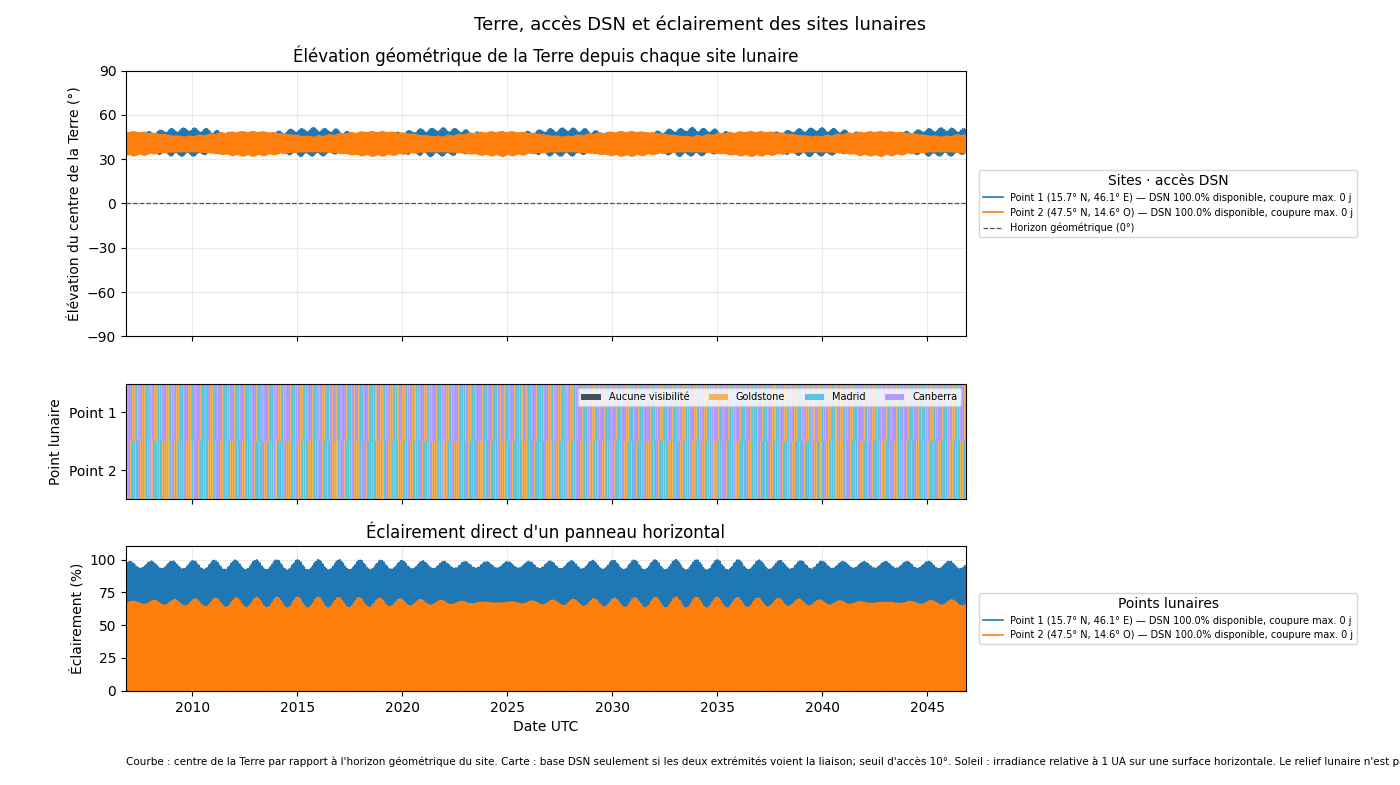
Two students following the course will take part in the 2026 NASA Space Apps Challenge on November 14–15, working on the Lunar Landing Site Navigator challenge. They have built simulations of communications between Earth and the Moon using the same orbital mechanics theory taught in this course.

Explore the NASA challenge
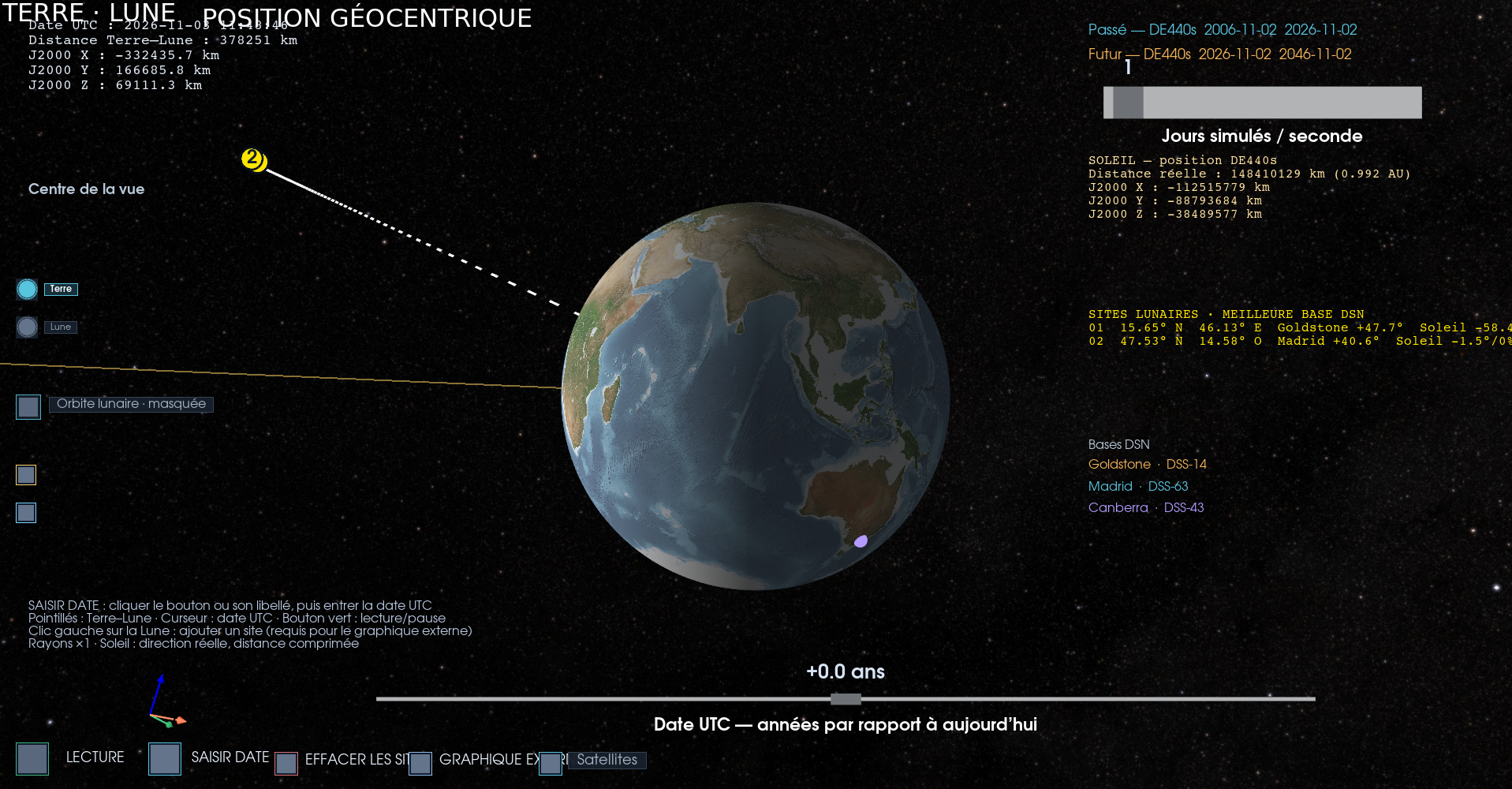
Earth–Moon simulation showing the Moon’s geocentric position, lunar sites and DSN stations.
Earth–Moon simulationGeocentric position, lunar sites and DSN stations.
Chart comparing Earth elevation, DSN access and direct sunlight at two lunar sites.
Lunar site access and sunlightLong-range comparison of Earth visibility, DSN access and direct illumination.

Have you completed a course?

Share your experience and help future learners discover what they can achieve.

Share your feedback